
Pesto alla Genovese (Italian Basil Pesto)
This post may contain affiliate links. Please read my disclosure policy for more details.

Pesto alla Genovese is the quintessential Italian basil pesto. It’s simple, ready in just 10 minutes, and incredibly flavorful. It’s delicious on pasta, chicken, fish, roasted veggies, and more.
Skip the store-bought pesto forever!
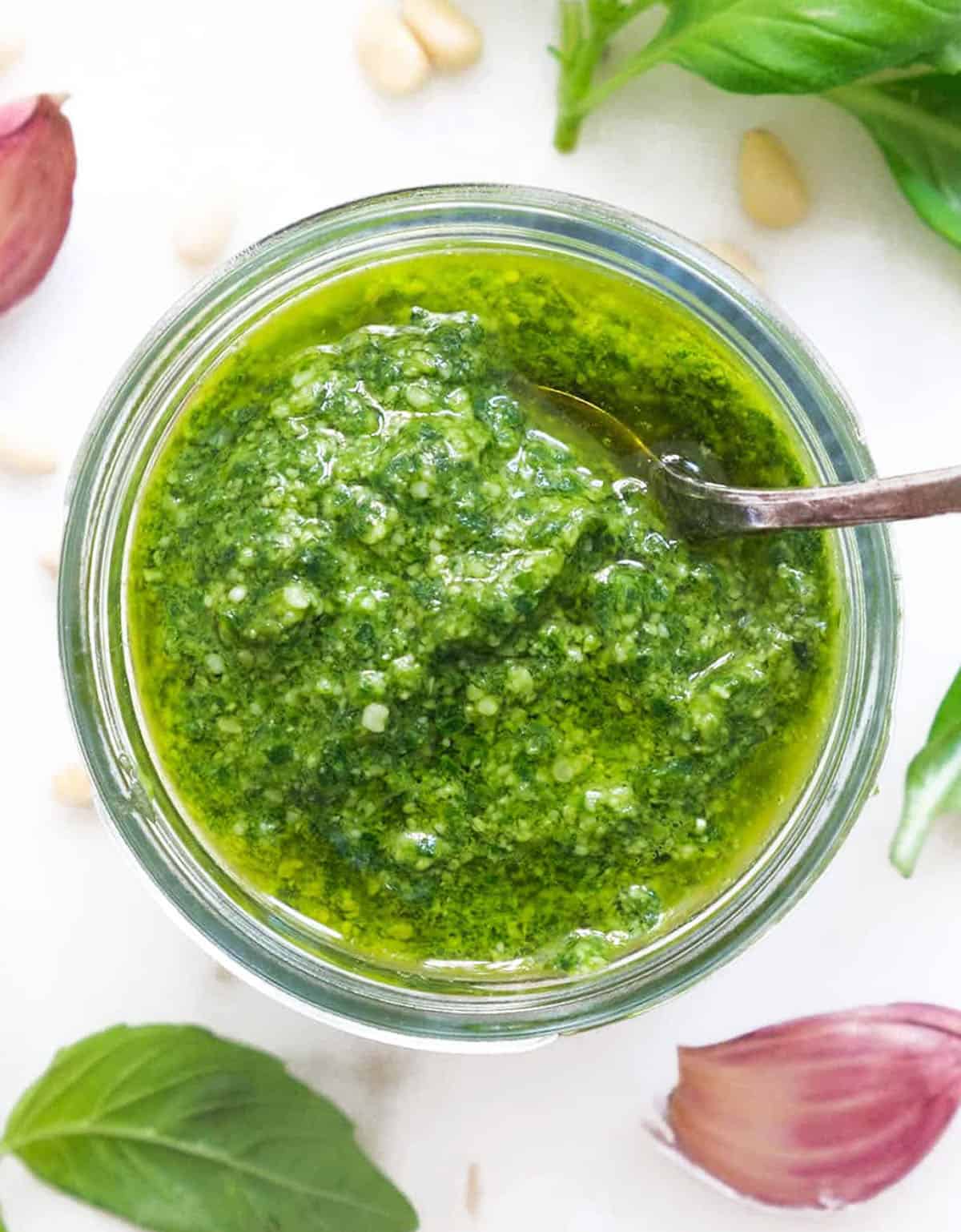
Why did it take me so long to publish this classic pesto alla Genovese recipe? It’s the quintessence of pesto recipes, truly a must in Italian cuisine, and it’s just UNREAL. It’s so fresh and flavorful that it pairs well with just about anything you can think of.
Join my newsletter for free weekly recipes!
Made with basil, pine nuts, garlic, extra-virgin olive oil, and a combination of Parmesan and Pecorino cheese, pesto alla genovese is an incredible, bold combination of flavors that boasts great depth and richness.
Originally from Genova, the capital city of Liguria in Northern Italy (and not Genoa, which is a football team, to be precise! : ), pesto alla genovese is traditionally made in a mortar and pestle. In fact, “pesto” got its name from “pestare” (the Italian word for “to pound” or “to crush”). These days, it’s a breeze to make using a small food processor or hand blender, making it a total no-brainer.
If you haven’t made homemade basil pesto before, you’ll fall in love with this classic Genovese pesto. Make it ahead, refrigerate or freeze, and keep on hand for weeknight pesto recipes. Friends, this is a keeper! 💚
List of ingredients
- Fresh basil
- Extra virgin olive oil
- Parmesan cheese
- Pecorino cheese
- Pine nuts
- Garlic
- Salt

Equipment
A small food processor works very well, but a blender or hand blender will also do. I also recommend a salad spinner for washing the basil.
How to make pesto alla genovese
(Note: This is a quick description; the full recipe is at the bottom of the page.)
- Use fresh, clean, and dry basil before starting. Remove the bigger stems.
- There’s no need to blanch the basil; no special tricks are required.
Basil
Italians typically don’t blanch the basil leaves and usually don’t use lemon juice in basil pesto recipes. Any color change is due to oxidation, which doesn’t affect the flavor.

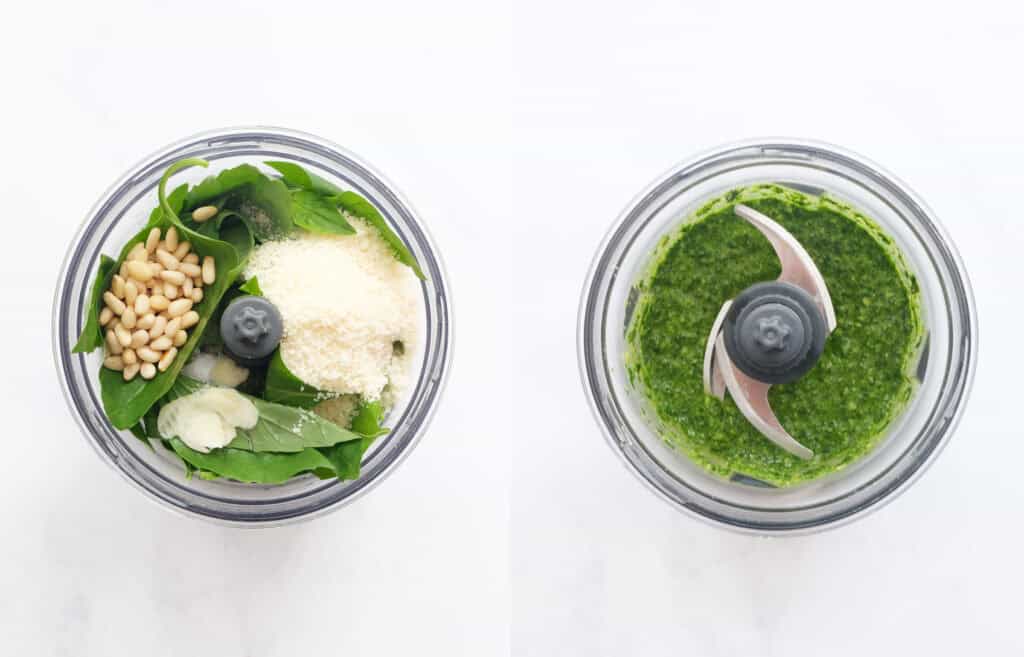
- Whizz the ingredients into a coarse texture.
- Next, add the olive oil and continue to blend until you achieve a pesto-like consistency, which should be slightly textured. However, feel free to get your favorite consistency: rustic or ultra-smooth. Done, enjoy immediately or store your basil pesto for later.
Recipe notes
Ingredients & substitutions
Basil: You need fresh, beautiful basil without signs of limpness or browning. The basil needs to be cleaned, washed, and dried properly. I recommend using a salad spinner and gently patting the leaves dry with paper towels.
Extra virgin olive oil: This is a key ingredient, and any substitution wouldn’t work. Use high-quality extra-virgin olive oil for the best flavor and the best pesto!
Garlic: It’s essential, but one clove typically adds enough punchiness without overpowering the delicate flavor of the basil. Please don’t overdo it.
Pine nuts: I know they’re quite pricey, but they add a creaminess and depth of flavor. You’re welcome to toast them if you wish, although we typically don’t, as the recipe doesn’t require it. Walnuts or cashews also work well and are more economical.
Cheese: Parmesan cheese adds a rich, umami flavor, while Pecorino, a sheep’s milk cheese, adds a delicious, salty aroma. This is the typical blend of hard cheese used for pesto alla Genovese; however, you can skip the Pecorino cheese if it’s not available, or use Grana Padano as an alternative to Parmesan cheese. The flavor won’t be quite the same, but it will still be delicious.
Salt: Parmesan and Pecorino cheese naturally add saltiness, so you might want to add just a little salt to taste, to bring out all of the flavors.

How to use pesto
The most popular Italian dish featuring Genovese pesto sauce is trofie pasta (a short twisted pasta shape), often combined with green beans and potatoes. But it’s also used to add a fresh, herby flavor to minestrone, such as this delicious summer vegetable soup. It’s great to make this ricotta pesto pasta or creamy pesto pasta. I even use it on pizza and garlic bread, as well as tossing it into salads, roasted veggies, bruschetta, and potatoes. Yes, pesto instantly elevates any dish!

Storage tips
Transfer your pesto to a glass jar with a lid and cover it with a thin layer of olive oil to prevent browning from exposure to air.
- Fridge: Store in the refrigerator for up to 4-5 days.
- Freezer: Freeze in a freezer-safe container for up to 3 months. You can also freeze it in ice cube trays with the lid until hard, then transfer the pesto cubes to a freezer bag. This method is super convenient when you need just a small amount of Genovese pesto.

More pesto recipes
Today’s recipe features the classic Italian basil pesto, but you can swap the ingredients to make different varieties of pesto recipes. Check out some of my favorites:
Lastly, if you make this pesto alla genovese or have any questions, please let me know by leaving a comment. I would love to hear from you! x
For more recipe updates, follow me on Instagram, Pinterest, and Facebook.

Pesto alla Genovese
Ingredients
Basil Pesto alla Genovese
- 1 ½ cup (45 grams) Basil leaves
- ¼ cup (20 grams) Parmesan cheese
- 2 tablespoons (10 grams) Pecorino cheese
- 1 heaped tablespoon pine nuts (toasting is optional)
- 1 small garlic clove, sliced
- ¼ teaspoon fine salt
- ¼ cup (60 ml) extra virgin olive oil
Instructions
- Wash and dry the basil well: Remove stems from the basil, wash the leaves and remove excess water (I recommend using a salad spinner), then pat them dry using kitchen paper.
- Whizz: Add the dry ingredients to a small food processor and whizz until finely chopped. If using a blender or immersion blender, you need to add the olive oil now (adding a touch of extra oil or water if it helps to blitz).
- Add the olive oil: Blend until well combined and smooth (I prefer to keep some texture, but you can blend it to the desired consistency).
- Serve or store: Stir in pasta, pasta salads, vegetable soups, roasted veggies, whatever you like. Alternatively, store it in the fridge or freezer (see my storage tips in the post above). Enjoy!